
Chris Moto
Building a Clear Website for a Local Motorcycle Repair Shop
A business website designed to help customers quickly understand services, hours, location, pricing, and how to contact the shop.
View Process2026
Business Website
UX/UI Designer & Developer
HTML, CSS, JavaScript
The Problem
Local businesses need websites that communicate essential information quickly without overwhelming customers.
The Solution
A straightforward website focused on trust, services, and contact information.
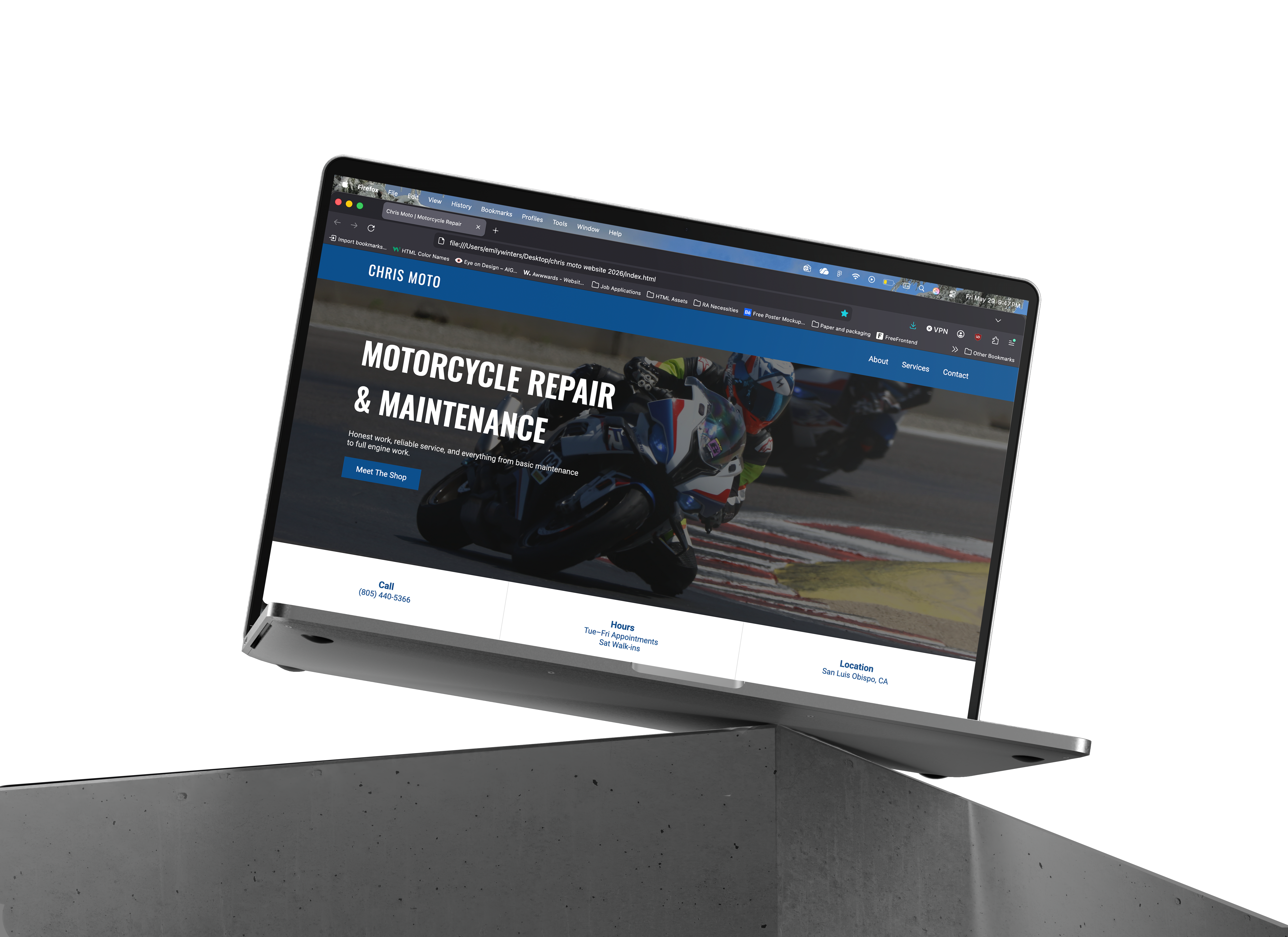
Chris Moto was designed around the information customers need most: what services are offered, where the shop is located, when it is open, and how to get in touch.
Clarity
Service information is organized into clear sections for quick scanning.
Trust
Real shop imagery and straightforward language help the business feel reliable.
Usability
Navigation is simple so customers can quickly find services, pricing, and contact details.
Process
From Research to a Functional Business Website
The project began with contextual inquiry and empathy mapping before moving into service organization, pricing layouts, and the final website design.
01
Contextual Inquiry
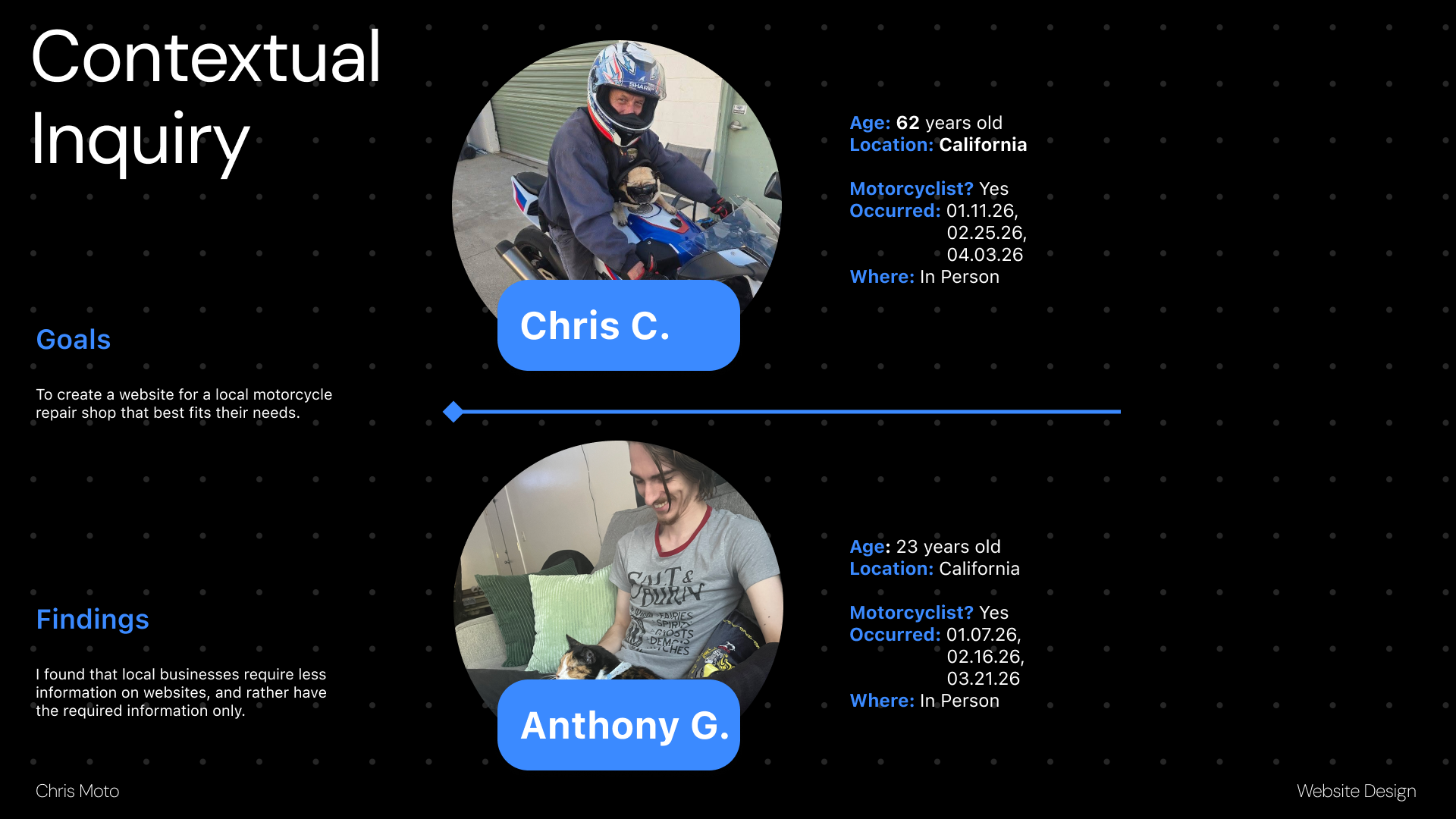
I spoke with Chris and Anthony to understand the shop’s goals, customers, pain points, and what information mattered most for the website.
Text summary
The contextual inquiry focused on learning what information motorcycle repair customers need most: services, location, pricing, hours, trust signals, and easy contact options. The findings helped prioritize a clear business website structure.
02
Empathy Map
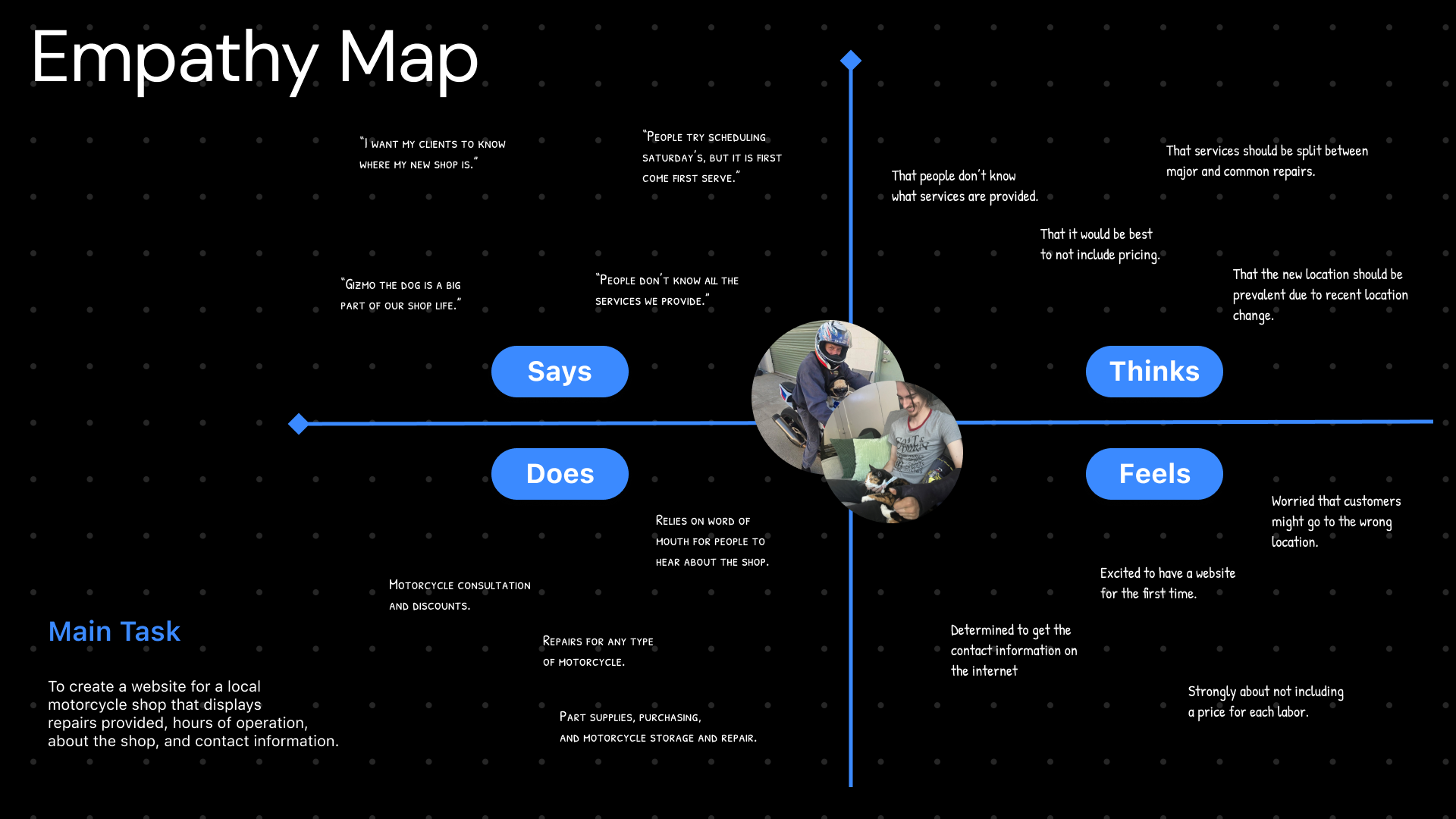
The empathy map helped identify what customers and the business owner say, think, do, and feel when looking for motorcycle repair information online.
Text summary
The empathy map captured what customers say, think, do, and feel when searching for motorcycle repairs. Users want trustworthy service information, straightforward pricing, and confidence that the shop can handle their repair needs.
03
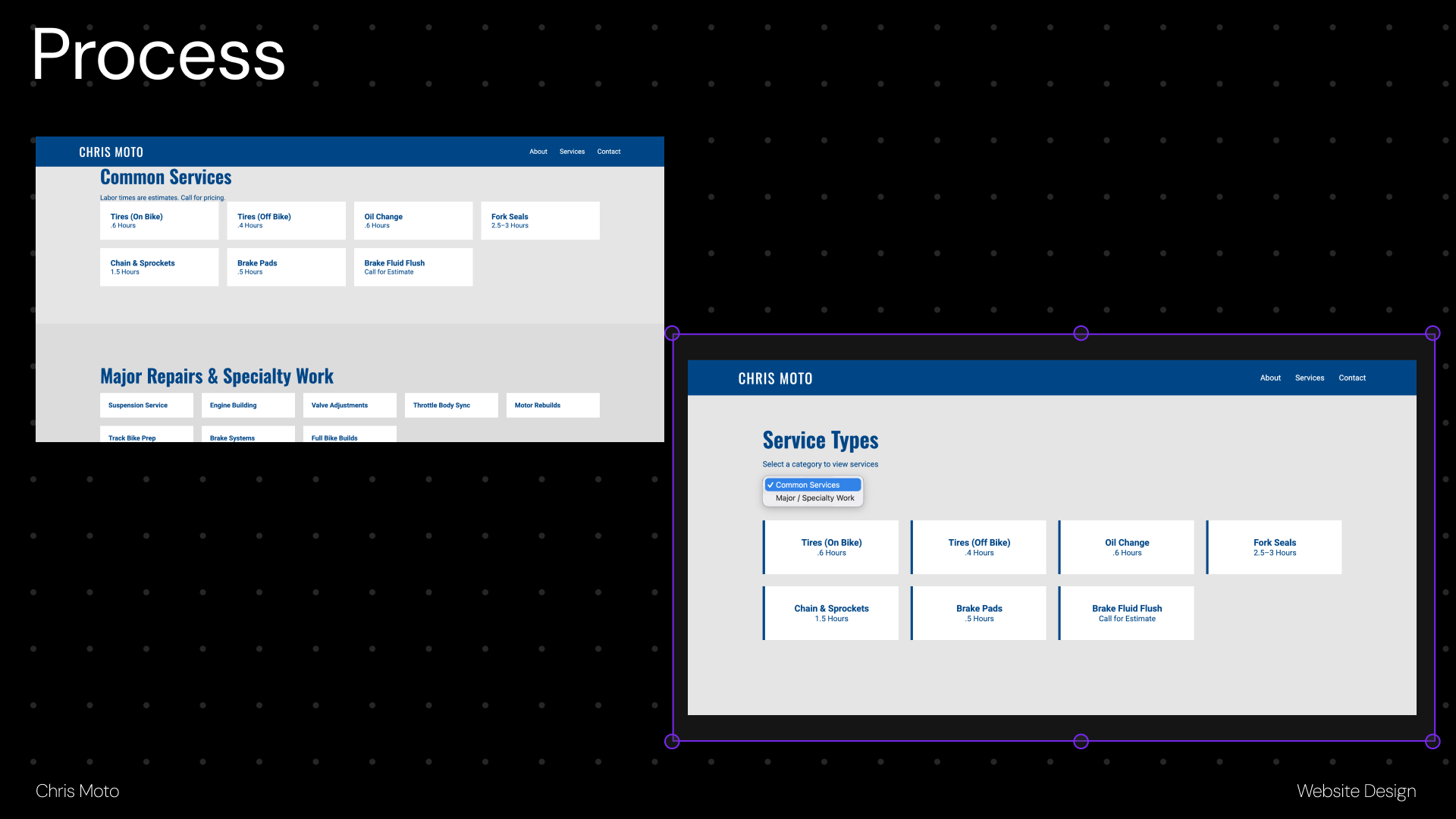
Initial Service Layout
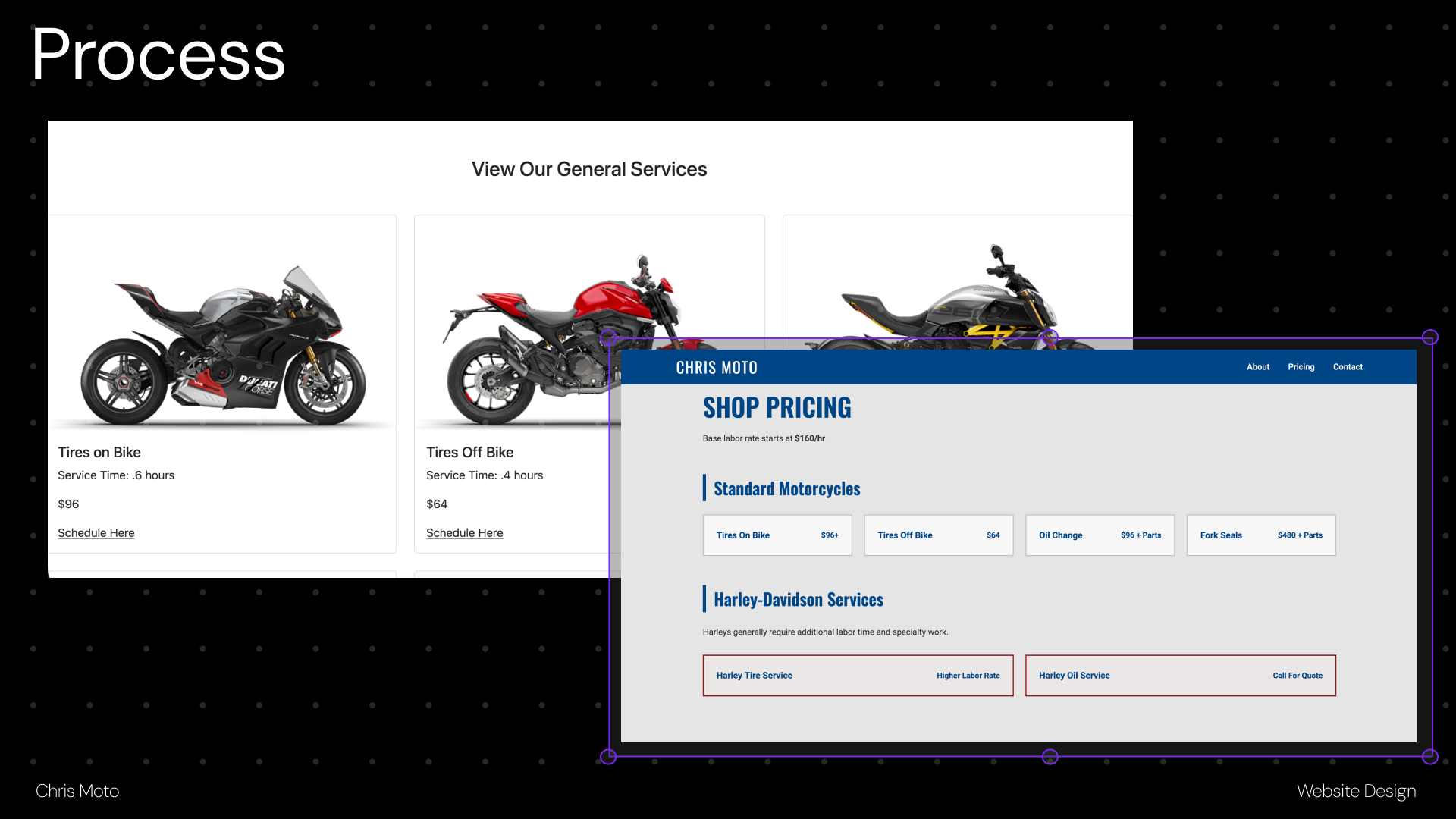
Early layouts explored how to display repair services in a simple format, while avoiding too much unnecessary information.
04
Refining Service Categories
I separated general services from major repairs and specialty work so users could find the right type of service faster.
05
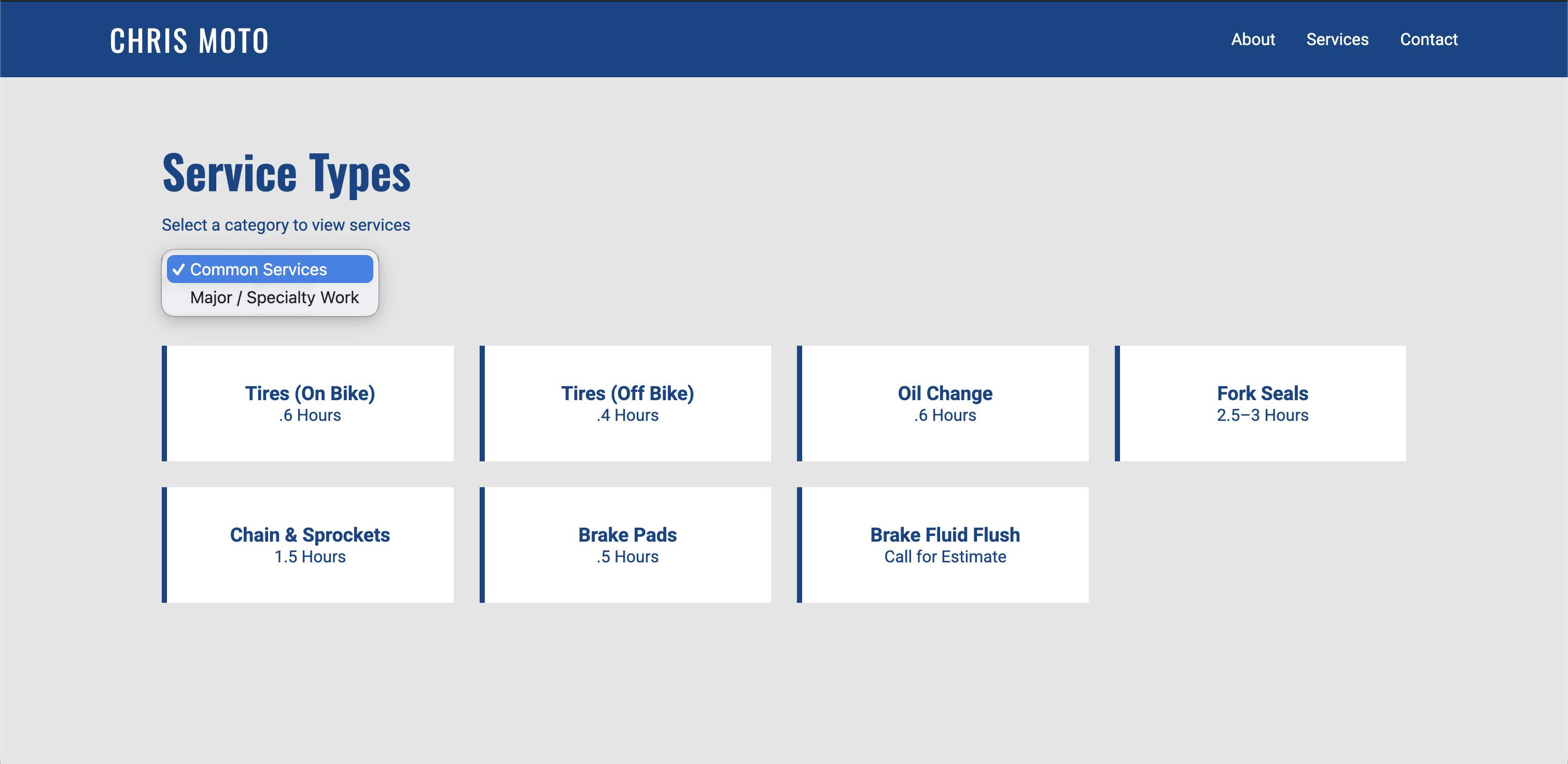
Pricing Structure
The pricing page was redesigned to show standard service pricing while leaving specialty or Harley-Davidson work as quote-based.
06
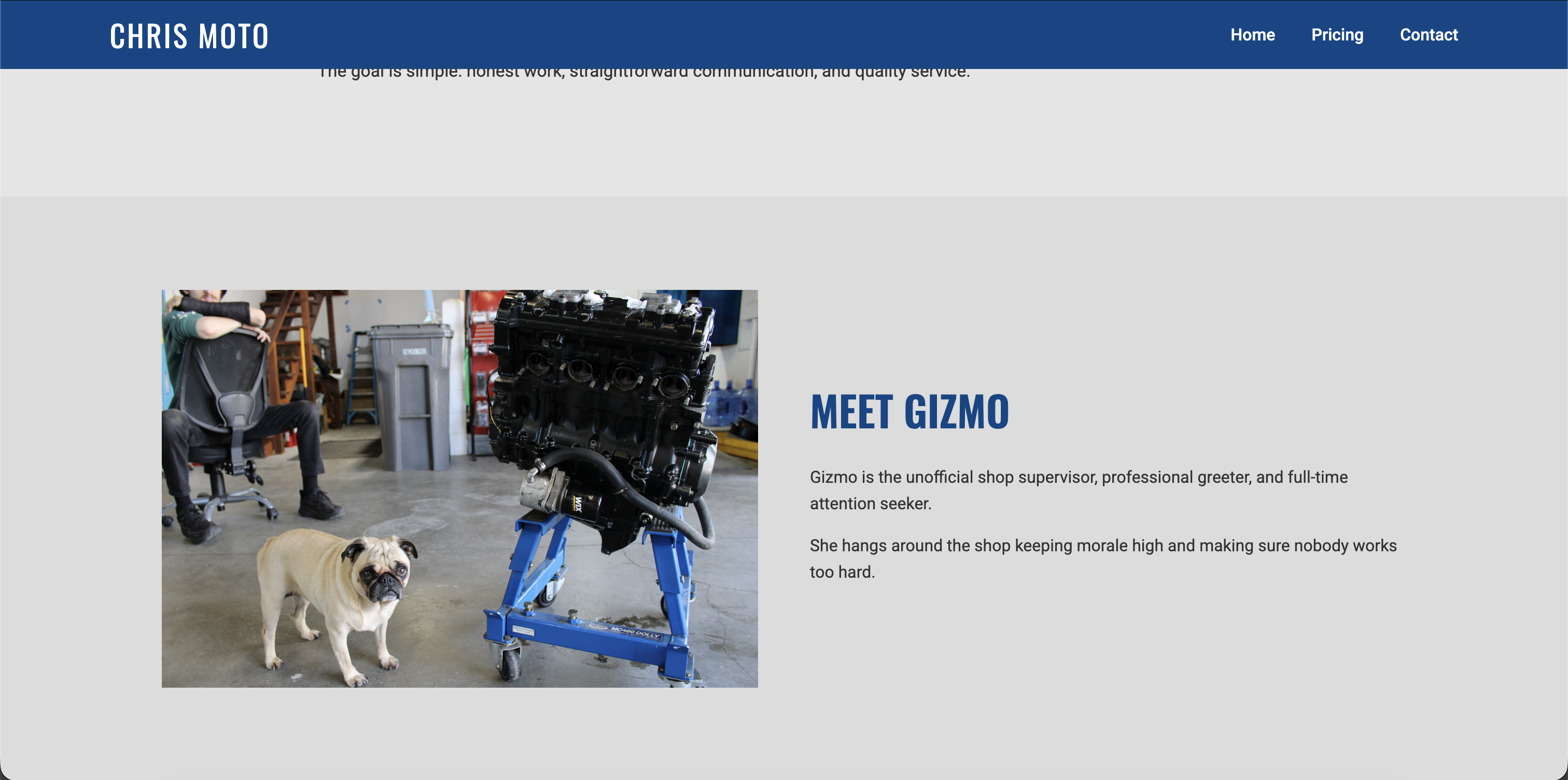
Adding Personality
The “Meet Gizmo” section adds personality to the site and makes the shop feel more human and approachable.
Final Product
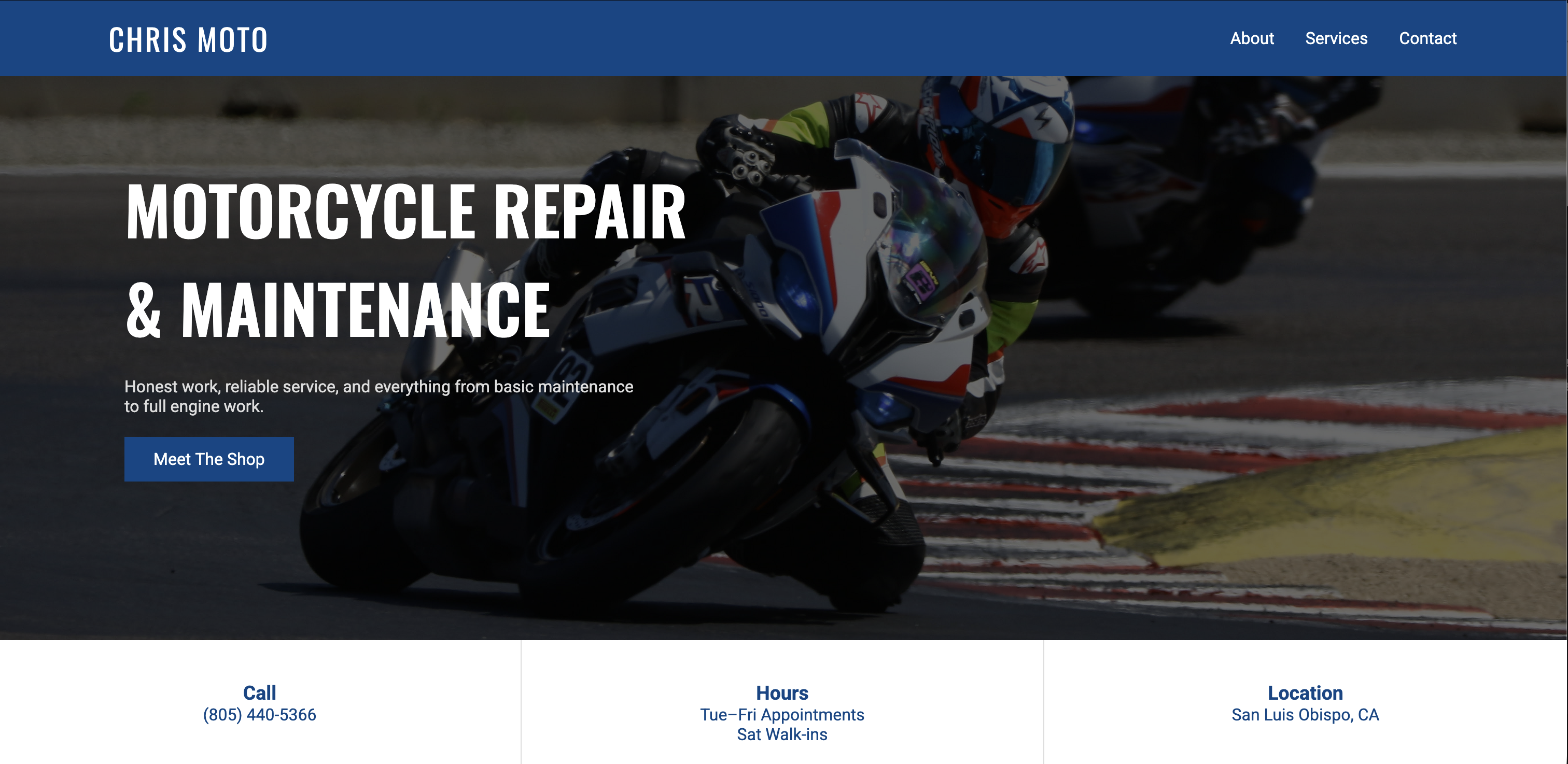
A professional online presence built around customer needs.
The final website is clean, easy to navigate, and puts the most important shop information front and center: services, hours, location, and contact.
Reflection
What I Learned
Chris Moto helped me understand how UX design applies to small business websites. I learned that users often need less information, not more, as long as the right information is easy to find and clearly organized.
Video Demo
Watch the Website Walkthrough
This screen recording shows the Chris Moto website in use, including the main navigation, service sections, pricing information, and final page layout.