
Wayste
Designing an App to Help People Locate Trash Bins in LA
A mobile app concept created to help Los Angeles residents and visitors find nearby trash bins, understand local sanitation issues, and take action in their neighborhoods.
View Process2024
Mobile App Design
UX/UI Designer
Sanitation, Navigation, Community
The Problem
In LA, sanitation issues are difficult to address when people do not know where to find accessible trash bins or how to identify problem areas.
The Solution
A mobile app that helps people locate bins and understand neighborhood sanitation.
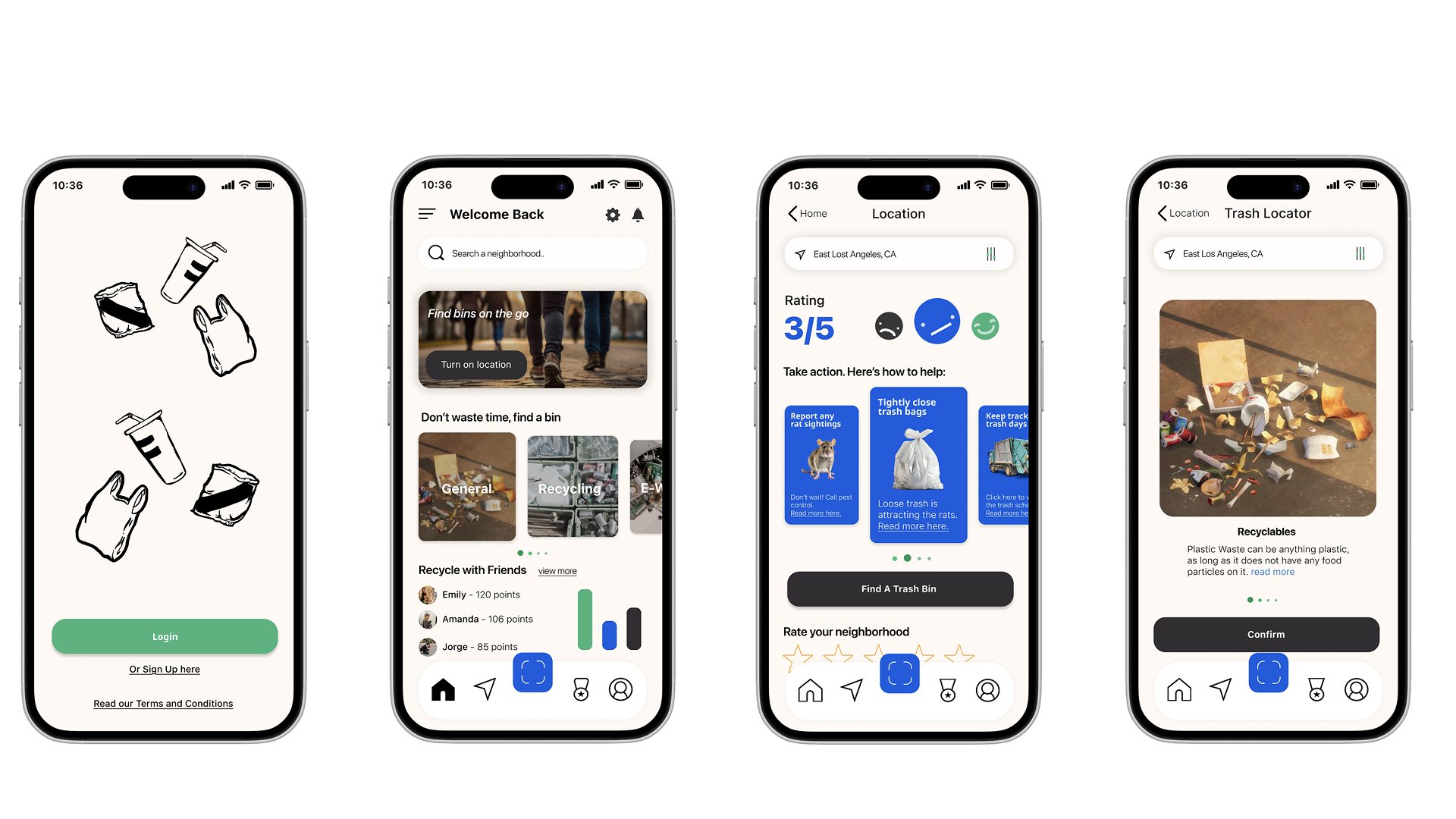
Wayste allows users to find specific trash bins, preview neighborhood cleanliness, filter by bin type, and take action through location-based sanitation support.
Locate Bins
Users can view nearby trash, recycling, compost, and e-waste locations.
Filter Results
Preferences like walkability, cleanliness, safety, and bin type make searching easier.
Community Awareness
Neighborhood ratings help users understand sanitation issues in specific areas.
Process
From Research to Final Mobile Screens
The project began with contextual inquiry and empathy mapping before moving into prioritization, sketches, and final mobile app design.
01
Original Application Idea
Wayste began as an app concept focused on helping people reduce public waste by making trash disposal more visible and accessible.
02
Contextual Inquiry
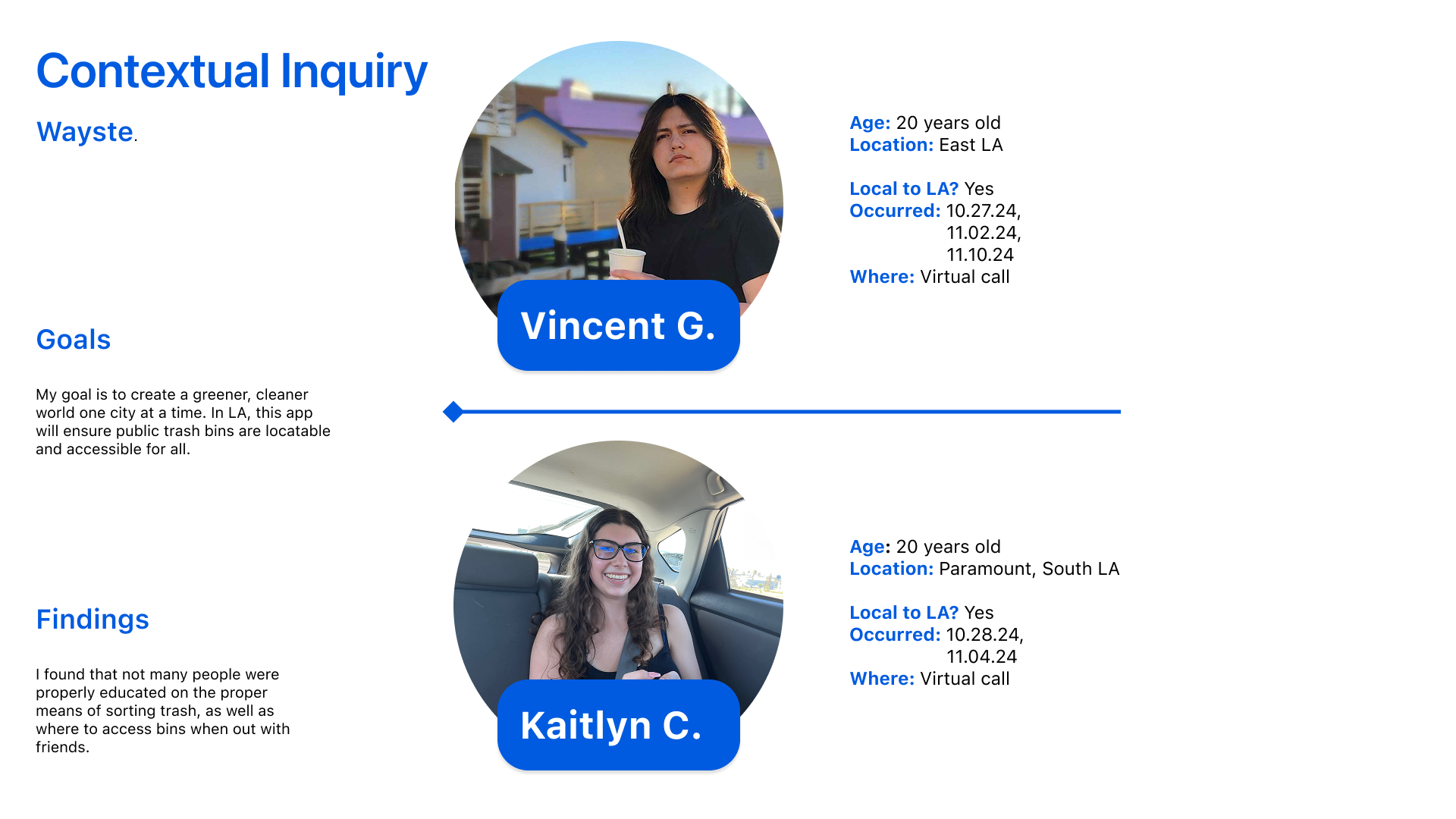
I interviewed LA residents to understand how they experience public trash, sanitation issues, and access to bins while moving through the city.
Text summary
The contextual inquiry explored how LA residents experience public trash, sanitation issues, bin access, and neighborhood cleanliness. These conversations helped define the need for a clearer way to locate disposal options.
03
Empathy Map
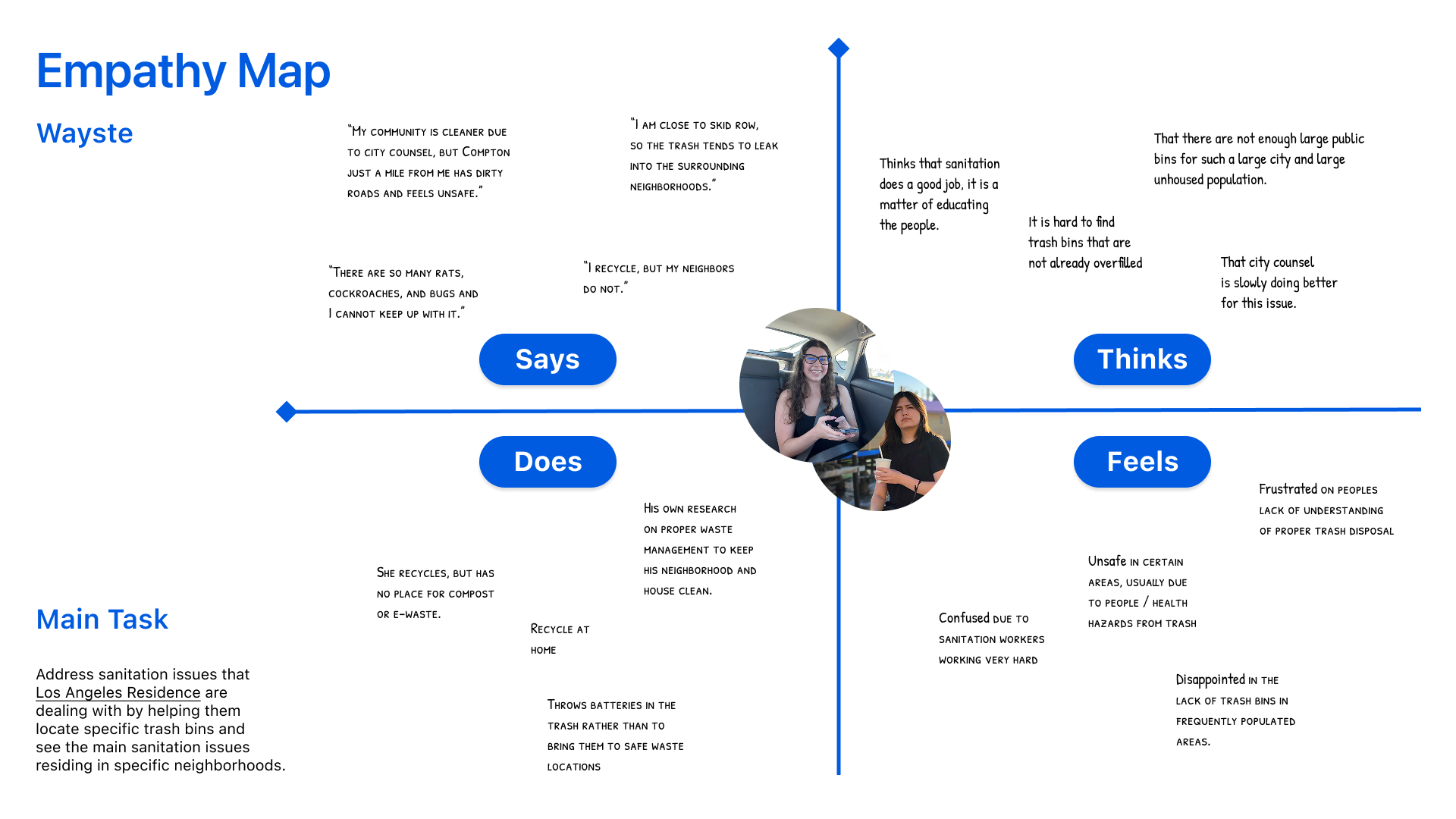
The empathy map organized what users say, think, do, and feel about trash, safety, cleanliness, and neighborhood sanitation.
Text summary
The empathy map organized what users say, think, do, and feel about trash access, safety, cleanliness, and frustration with hard-to-find bins or unclear sanitation information.
04
Impact / Effort Matrix
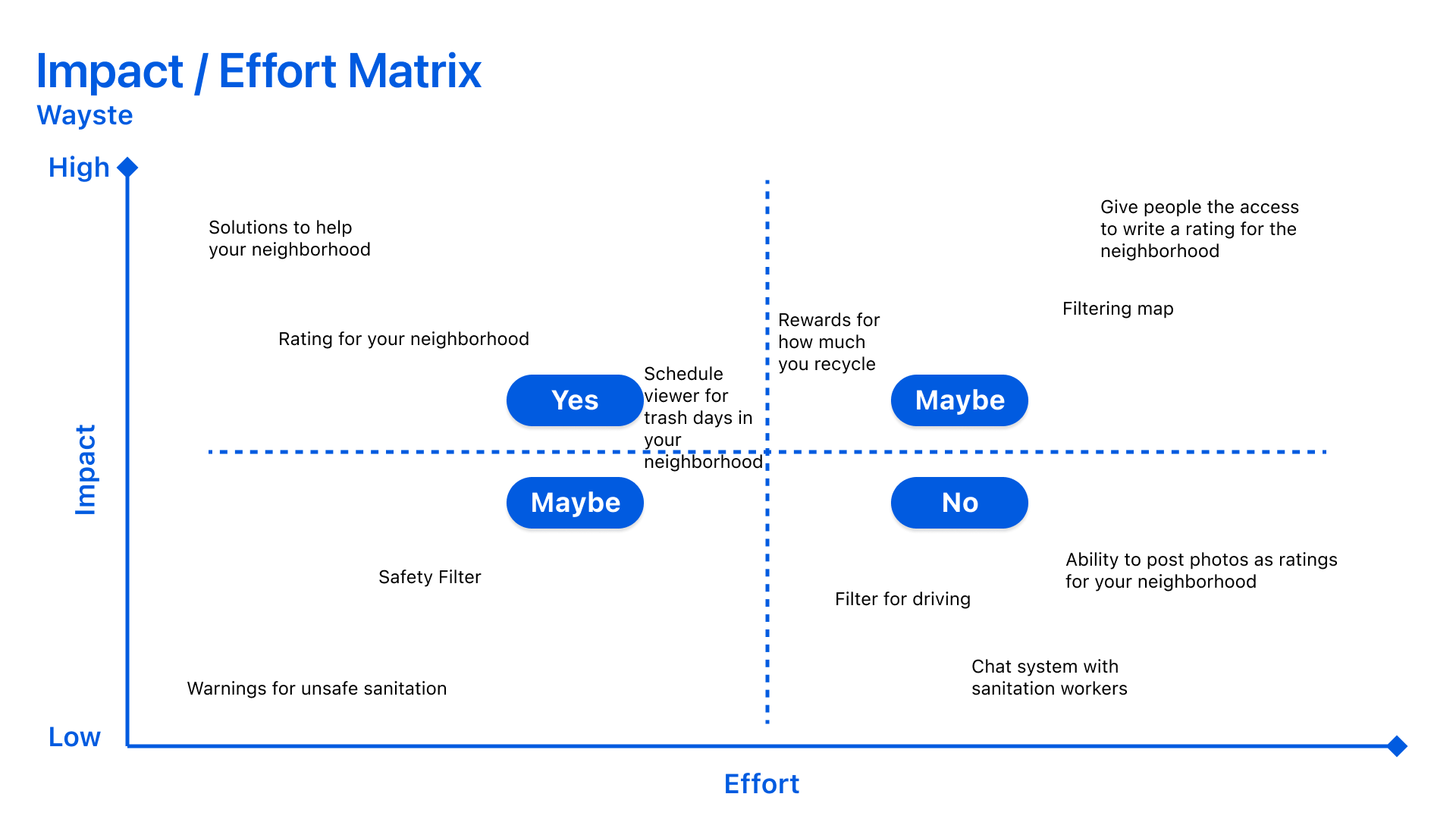
I used an impact and effort matrix to prioritize features that would be useful but still realistic, including neighborhood ratings and scheduled trash day viewing.
Text summary
The impact/effort matrix helped prioritize features by comparing usefulness against implementation effort, including neighborhood ratings, filters, trash-day information, and bin-location tools.
05
Case Study Planning
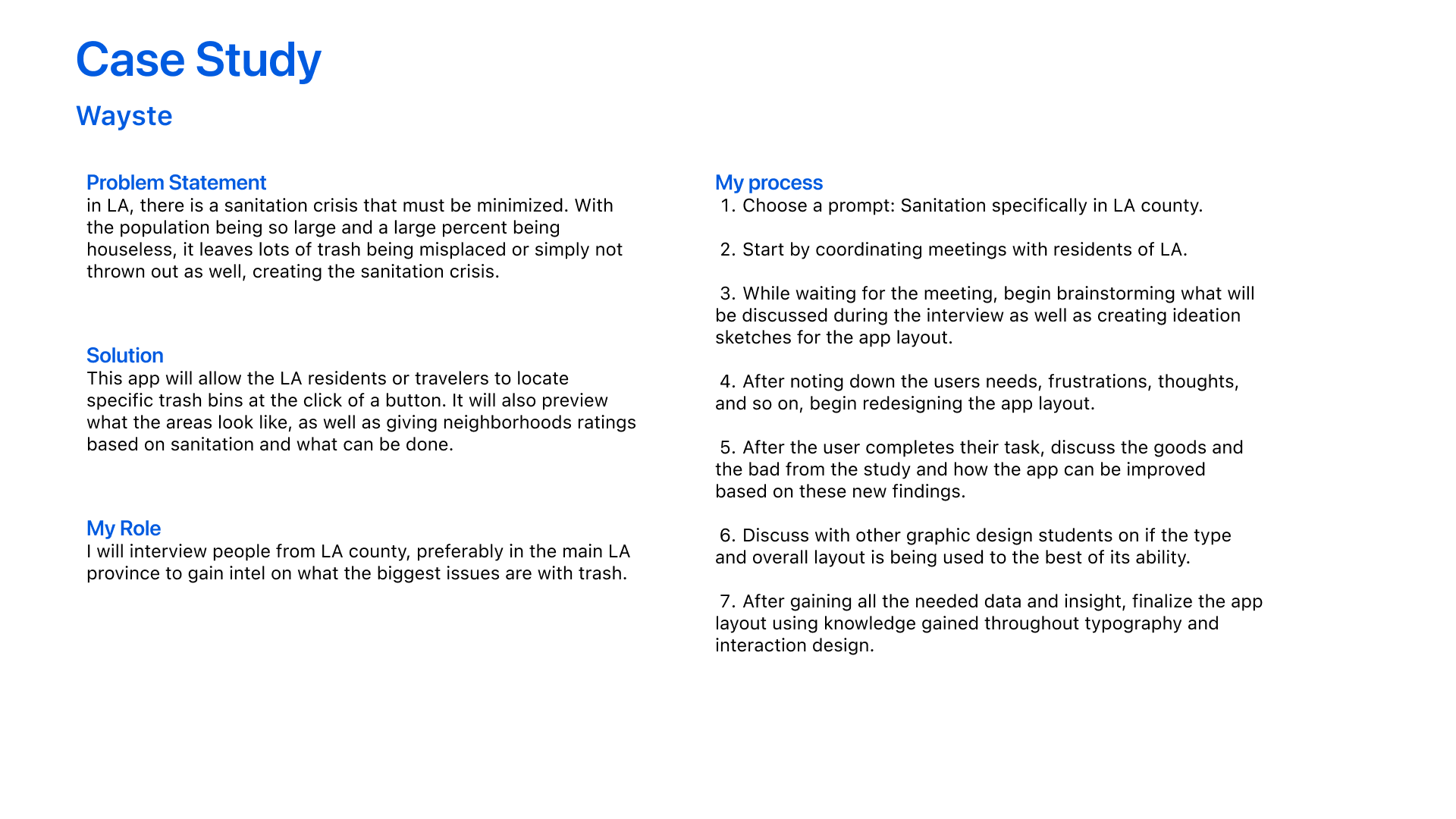
I defined the problem statement, solution, role, and process before moving into layout sketches and app structure.
Text summary
The case study plan defined the problem, solution, role, and design process before moving into sketches and final app screens.
06
Sketches
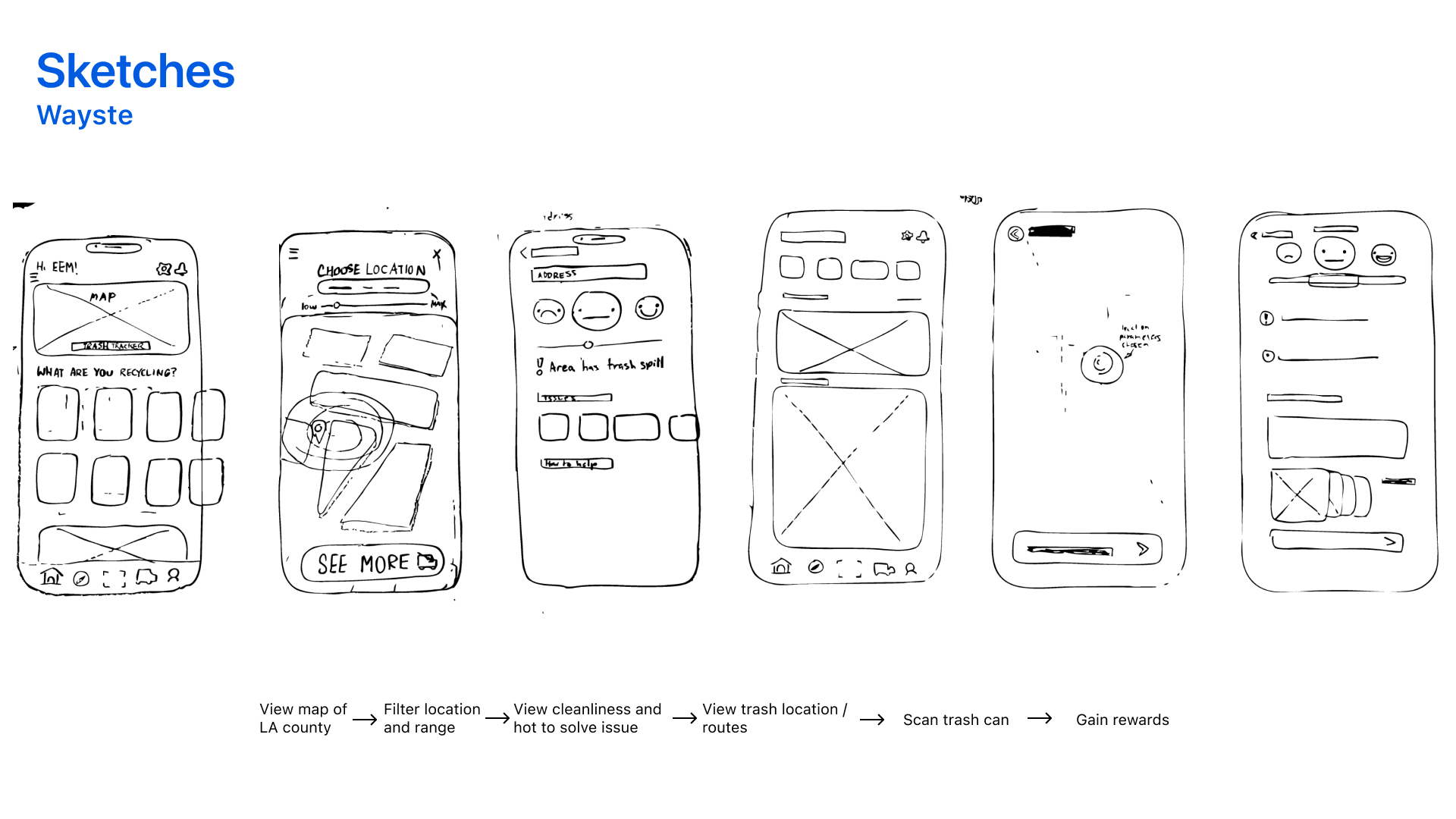
Early sketches explored the flow from viewing a map of LA County to filtering locations, viewing cleanliness information, scanning bins, and gaining rewards.
07
Final Design: Home and Trash Locator
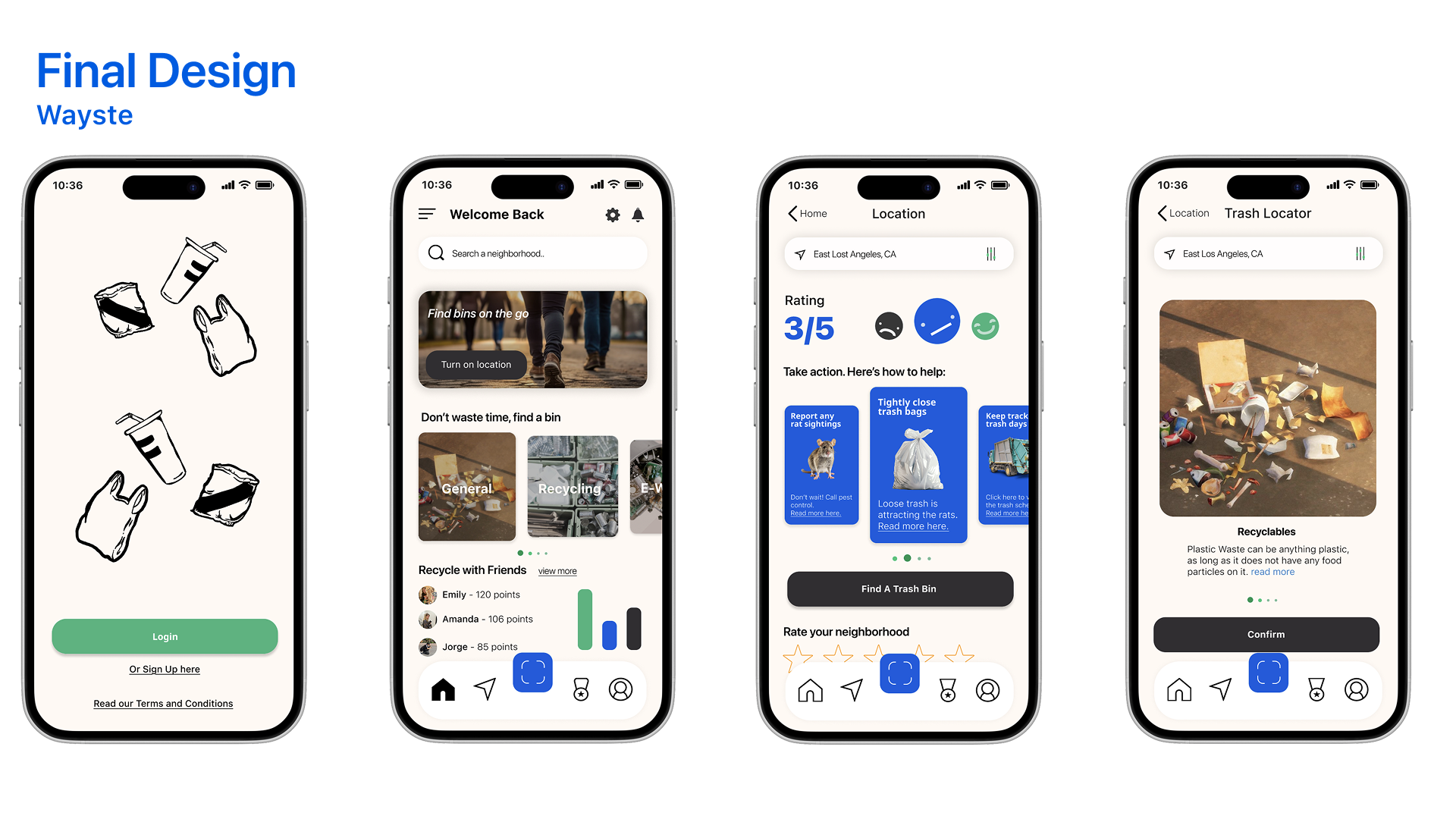
The final screens introduce the app, show neighborhood information, and help users begin searching for trash bins based on their location.
08
Final Design: Filters and Route Preview
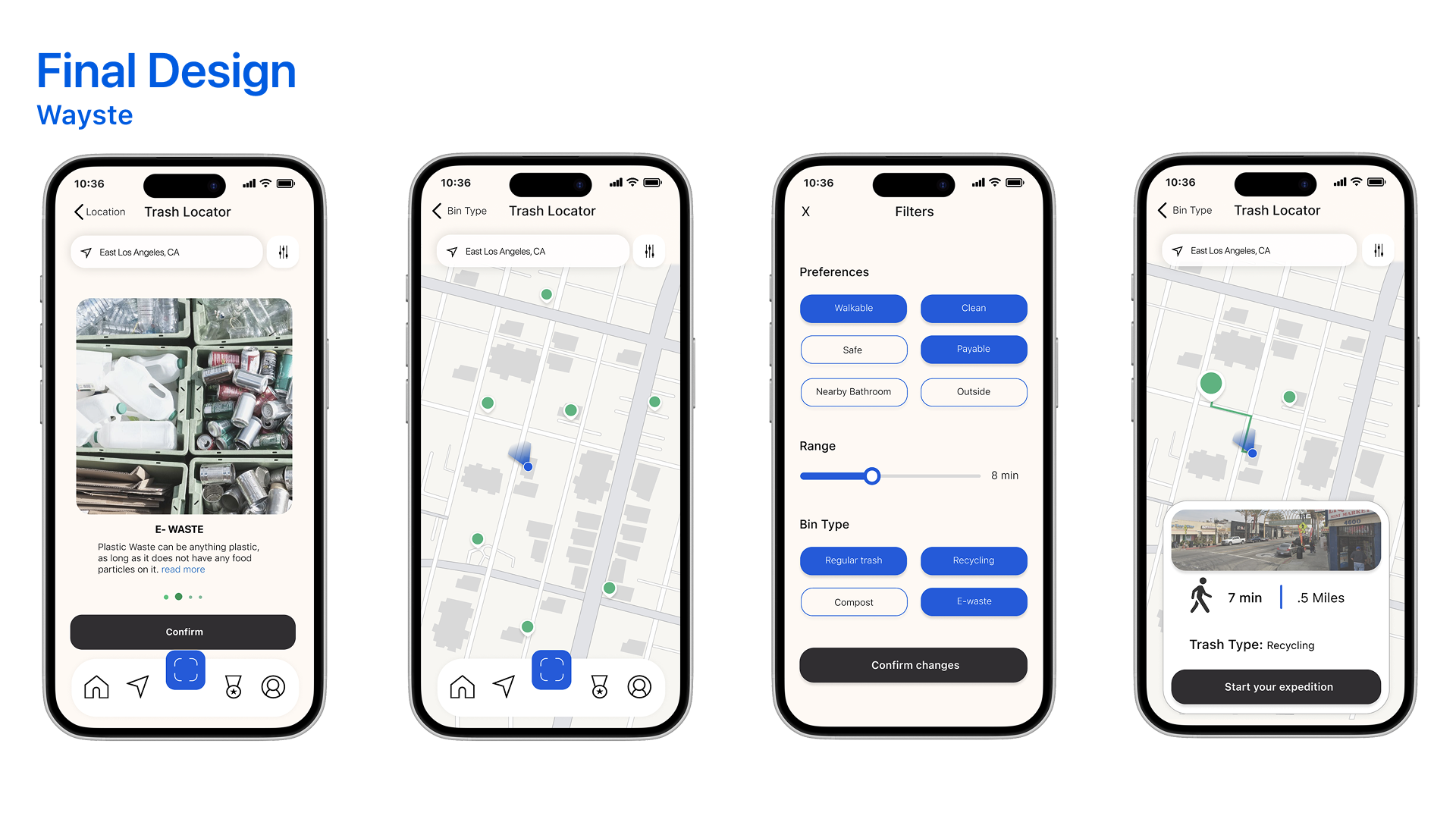
The final search experience includes bin-type filtering, preference controls, range selection, and route information to nearby trash locations.
Final Product
A mobile tool for cleaner, more informed neighborhoods.
Wayste combines trash-bin location, cleanliness ratings, filters, and community support into one mobile experience designed around everyday sanitation needs.
Reflection
What I Learned
Wayste helped me practice turning research insights into a clear app structure. I learned how interviews, empathy mapping, and prioritization tools can guide design decisions and help make a product feel more useful for real users.